Lizbeth Moss
Down Cemetery RoadLizbeth Moss is a thirteen-year-old Oxford girl whose death after taking Ecstasy reverberates through the investigation of Sarah Trafford and Joe Silvermann. Though she appears only through news reports and other people’s accounts, the circumstances of her death turn her into both a real victim and a weapon in the effort to make Sarah implicate Joe.
Identity and Public Account
Lizbeth is identified in the news as a local girl of thirteen who died after taking Ecstasy at a rave. The initial report specifies dehydration as the cause of death, a detail that sits beside the more compressed public explanation that Ecstasy killed her. The news also includes an interview with a parent described as angry and grief-stricken, making private loss part of the public story.
A later report names her as Lizbeth Betts, while the police address Sarah with the name Lizbeth Moss. The difference accompanies a shift in emphasis: the broadcast reports a child’s death, whereas the newspaper headline turns the case into a story about the man who sold her the drug and escaped justice. The supplied accounts do not explain the name variation.
Death and the Suspected Drug Supply
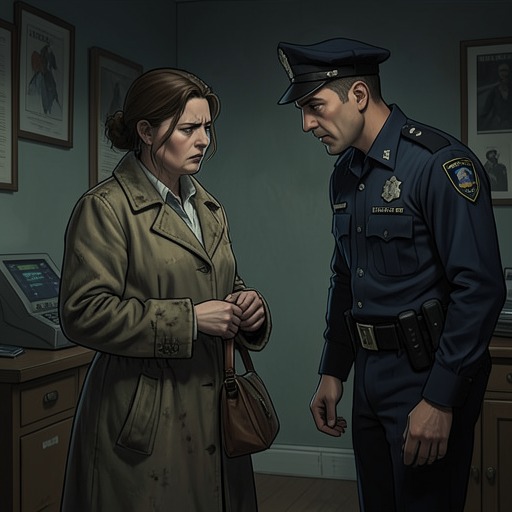
The police connect Lizbeth’s death to a suspected supply of Ecstasy by Joe Silvermann. Inspector Ruskin tells Sarah Trafford that investigators believe Joe supplied the drug that killed Lizbeth and asks whether Sarah understands why the police consider him a person of interest. His account is an allegation presented during questioning, not independent confirmation in the available evidence.
The accusation places Sarah under additional pressure because she has received money from Joe. Ruskin asks whether she was one of Joe’s customers, linking the payment to the suspected drug supply and Lizbeth’s death. In a later conversation, another official warns Sarah that Joe would have faced severe consequences if he were alive, portraying him as an older man who sold pills to schoolchildren. These claims make Lizbeth’s death central to the case against Sarah as well as to the case against Joe.
Aftermath and Narrative Role
Sarah first encounters Lizbeth’s death as a radio report while travelling with Joe. Joe calls it tragic and turns off the radio. The brief exchange places the news between them without resolving what Joe knows or whether he had any connection to Lizbeth’s supply of Ecstasy; the report’s immediate effect is to end the conversation.
Later, Sarah dimly recalls the news headline about the man who sold E to Lizbeth Betts. That public framing helps explain the urgency of Inspector Ruskin’s questioning, but it also shows how a reported death can be made to serve an investigative purpose. When Sarah declares that her earlier statement was made under duress and threatens to hold a press conference, Lizbeth’s death remains part of the coercive case being used against her. Lizbeth is therefore not merely background to the plot: her reported death gives the authorities a grave accusation to press, while the distinction between reported suspicion and established fact remains unresolved in these scenes.